Arriving at a point where you have to register for VAT, whether you are opting for the lower voluntary income threshold or have made it to the point where you must register by law, is an exciting and stressful time for any business. Today, we are looking more closely at the VAT registration process, especially regarding costs and requirements, to help make this time as smooth as possible for you.
How Much Does It Cost To Register A Company For VAT?
There is a common perception that it has to cost money to register a company for VAT. This is due to the number of ‘fast-track’ third-party vendors who will handle the process for you. Of course, they want payment for their work. However, if you are registering for VAT directly with SARS, there is no payment asked of you.
Instead, you will complete the registration process (find more details directly from SARS here) via your existing eFiling profile, provide them with the needed proofs and supporting documents, and receive your VAT number without needing a fee. However, you will be liable for all VAT-related costs and to submit your VAT201 forms from the first date where you exceed the compulsory VAT threshold, regardless of any delays generated in registration on SARS’s side, so you must keep accurate financial records and track these amounts to make the process as smooth as possible.
Of course, if you choose to use your tax practitioner or a third-party service, there will be admin and professional fees to pay, but that choice is yours.
What Is Required To Register A Company for VAT?
The most important part of registering a company for VAT is determining if you have to and why (if you are opting for a voluntary registration). For mandatory registration, you have to exceed a taxable turnover of R1,000,000 in a 12-month period. Do note that that is any 12-month period, not tied to your tax year or other benchmarks. Voluntary registration is, however, possible once you pass R50,000 in annual turnover. Voluntary registration can be beneficial for certain businesses as it allows them to claim input tax credits, gives a professional air to your business, and allows you to work with VAT-registered businesses that also want to claim their VAT refunds as needed.
You will then complete the VAT101 form from SARS, which can be done electronically via eFiling. Along with this, you will have to provide:
- A certified copy of your business’s registration documents, such as the Certificate of Incorporation.
- Proof of identity of the person applying for VAT registration, such as an SA ID or passport.
- Proof of the business’s physical and postal addresses.
- Your company’s bank account details
- Your existing Income Tax number
Your business should be fully compliant with all relevant other tax obligations, including income tax, and have filed all necessary tax returns.
How Do I Register My Business For VAT In South Africa?
We’ve looked at the VAT registration process in detail above, and you can also consult SARS’s guide on VAT registration for complete details. To recap, however, you should:
- Determine that you are eligible for compulsory or voluntary registration
- Complete the VAT101 form via eFiling
- Submit the required supporting documents, including business registration documents, the ID of the registered representative who is applying, proofs of the company’s bank account and physical/postal addresses, and the linked tax number of the business.
- Ensure your other tax matters are fully compliant.
Once the VAT101 form is received, SARS will process your application. This can take a while, as they will perform some mandatory checks. However, for businesses that are not seen as a risk, they will often issue a VAT number near-immediately, and you can use it from that point forward.
How Does VAT Work For A Small Business?
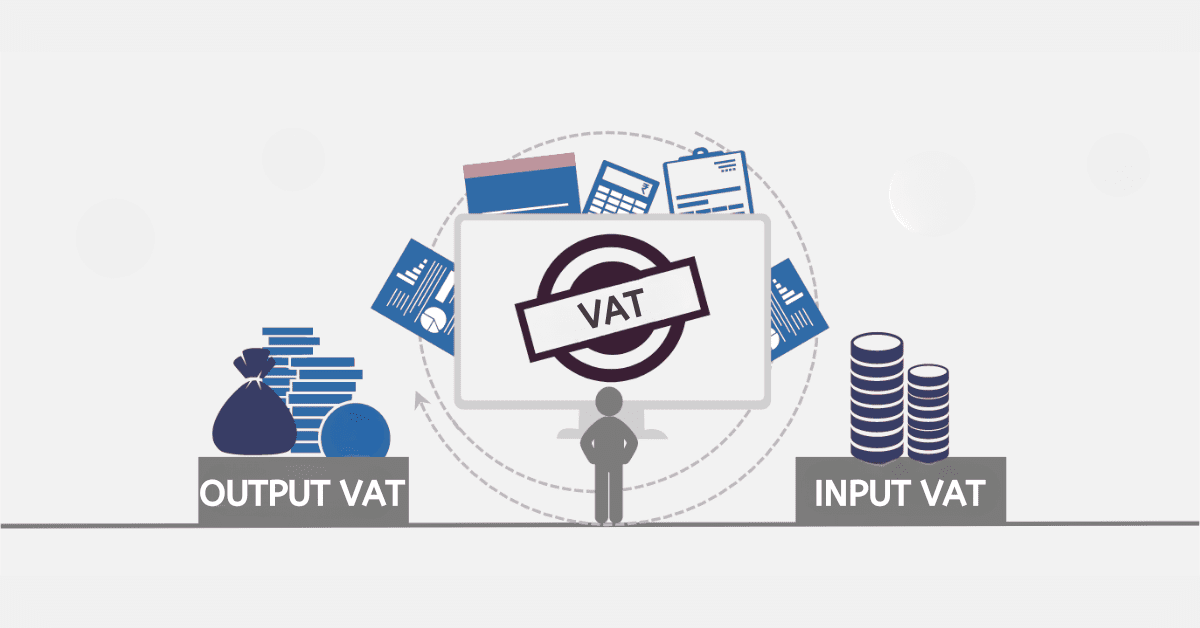
No matter the size of your business, VAT works in very similar ways. However, for small businesses in South Africa, VAT offers a great opportunity but also comes with some challenges, including the need to submit the VAT201 form tracking your VAT paid and VAT incurred every 2 months.
Once you are VAT registered, you need to charge (and clearly show) VAT on your sales invoices. So, you will now display an ex-VAT and VAT-inclusive price on your invoices. This doesn’t mean you now need to charge more, however. For non-VAT registered vendors, the ‘final price’ is the equivalent of the VAT-inclusive amount.
You will file your return every 2 months based on the group (A or B) SARS assigns you to. This doesn’t change the process at all but will determine if you submit returns in ‘odd’ or ‘even’ months to split their processing burden. Maintaining accurate financial records around VAT incurred and charged is critical. Small businesses should keep track of all transactions involving VAT, both for sales and purchases. Ensure that your small business complies with all VAT regulations and meets its filing deadlines. Non-compliance can result in severe penalties and fines.
While registering a business for VAT in South Africa does incur a lot more administration and the need to clearly display the VAT charged, it can also open a lot of doors. Most larger VAT-registered businesses only want to interact with other VAT-registered entities to claim all amounts due to them. Luckily, the process of VAT registration is relatively simple.