No one wants to lose a loved one just to get some extra assets. However, knowing how to navigate the sometimes complicated inheritance landscape in South Africa will at least help lessen the administrative load that comes during a difficult period in your life. Today we are covering the basics of inheritance taxation in South Africa, especially regarding property you may receive from the deceased.
What is the Property Tax on Inheritance in South Africa?
In South Africa, property tax on inheritance primarily takes the form of Estate Duty. Estate Duty is a tax levied on the entire estate of a deceased person (i.e., everything they leave to posterity). It is calculated based on the net value of the estate at the time the person passes away. The net value of an estate covers not only actual buildings and property they leave, but also investments, liquid cash, and investments. We will look at properties themselves in a moment, but here are some Estate Duty basics everyone should know:
An exemption threshold of R3.5 million exists for Estate Duty. This means that estates with a net value below this threshold are not subject to Estate Duty in any way. While the rising property prices in South Africa mean that many properties will be enough to push Estate Duty over that 3.5 million threshold, this does provide considerable relief to poorer families.
Estates with a net value exceeding the exemption threshold are then subject to Estate Duty at a progressive rate. The rate starts at 20% for the portion of the estate above R3.5 million and increases on a sliding scale. Let’s just highlight something important here- everyone gets the R3.5 million exemption. Once it passes R30 million, the tax rate
Do You Pay Capital Gains Tax on Inherited Property in South Africa?
You will not be responsible for paying Capital Gains Tax (CGT) on the property you inherit when you inherit it. If you intend to keep the property, and you can take control of it from the estate without a forced sale to settle other debts, you can take it without paying CGT on it in that year.
However, that doesn’t mean you are completely free of any CGT implications. The inheritance process is seen as a disposal and acquisition, so the value of the property at the time you receive it will be used towards future CGT considerations if you then sell the property. If you intend to sell the property soon after the deceased passes on, this could impact how much tax you pay at the time of the sale.
How Much Can You Inherit Tax-Free in South Africa?
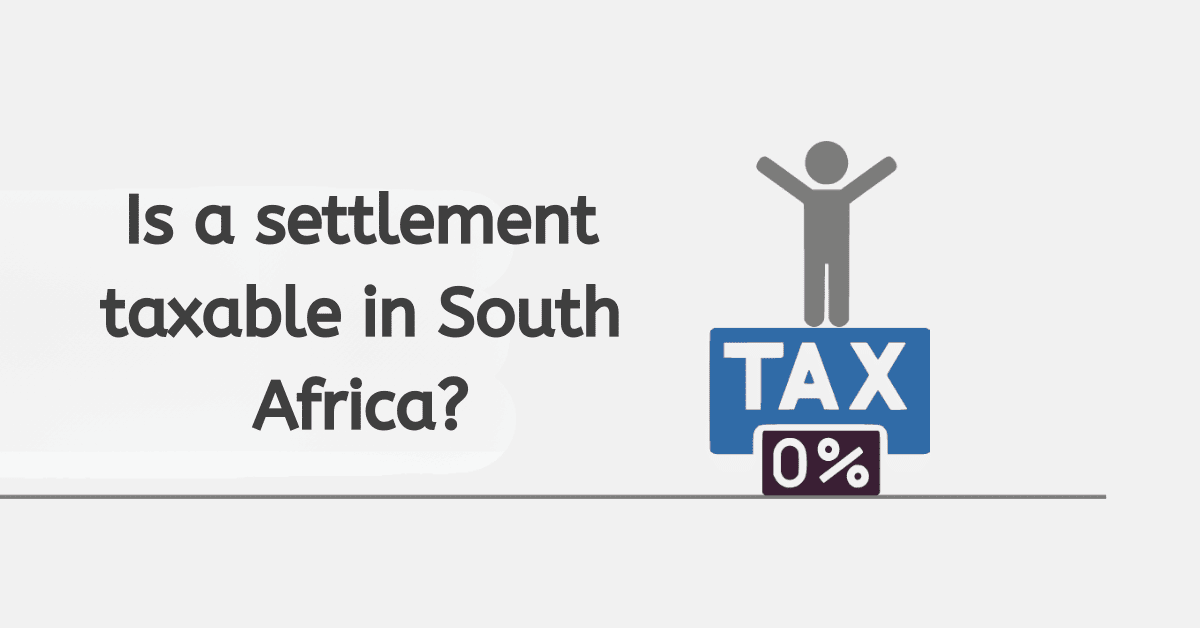
Another important thing to understand is that Estate Duty is paid by the deceased’s estate before it is released to those who will inherit it. So you will not pay any tax on an inheritance you receive. The tax is payable during the settlement of the estate. There is an Estate Duty exemption of R3.5 million in South Africa. Estates under this value will be tax-free in totality.
Remember that this isn’t just ‘cash in hand’, but is the total of everything the deceased owned- from things like possessions and cash in the bank right through to the assessed value of vehicles, the primary home, and other property. Additionally, for cases where the deceased’s spouse passed before them, the rebate rises to R7 million, less the amount used for the predeceased spouse’s estate.
In cases where liquid funds in the estate do not cover the full Estate Duty due, the executor may have to sell non-liquid assets (like vehicles or property) to cover the bill. Alternatively, inheritors may be given the offer to pay the estate duty amount to keep the asset.
How to Avoid Inheritance Tax in South Africa?
It is not possible to (legally) entirely avoid Estate Duty in South Africa. Let’s reiterate, however, that Estate Duty is paid from the deceased’s estate, not by the people who inherit it. You will receive your bequests tax-free when they happen. However, there are legal strategies to minimize its impact, many of which would need to be handled through smart estate planning before death. Estate planning means structuring your assets in a way that maximizes exemptions, deductions, and exclusions. Seeking professional advice to create a comprehensive estate plan is essential, as it can get complex.
For example, there is an annual threshold for gifting (classed as donations) which can be used cumulatively over your later years to pass on assets and reduce the overall value of your final estate (and the estate duty it attracts). The same goes for making charitable bequests and other exemptions under tax law. This is why the knowledge of a skilled professional is invaluable when planning for larger estates. Do be aware, however, that ‘obvious’ attempts to leverage these deductions in the final few years of life may generate a tax inquiry- another reason that smart estate planning should be done years before it is needed, especially if you have a lot of assets to pass on to loved ones.
While you will not be able to achieve complete avoidance, strategic planning can significantly reduce the impact of Estate Duty on your estate.