Since its establishment, the National Student Financial Aid Scheme (NSFAS) has played a crucial role in helping students from poor backgrounds to pursue their studies at tertiary institutions. Several events have contributed to the current outlook of the bursary scheme. Keep on reading to learn everything you want to know about NSFAS.
When Was NSFAS Established?
NSFAS was established in 1999 under the National Student Financial Aid Scheme (Act 56 1999). It replaced the Tertiary Education Fund of South Africa (TEFSA) in 1999. TEFSA was a non-profit organization that was mandated to provide loans to university students.
What Is the History of NSFAS in South Africa?
The education system in South Africa passed through two major phases including the pre-apartheid and post-apartheid. During the pre-apartheid era, access to university education was difficult for the majority of students of colour due to the influence of white supremacy.
For instance, the apartheid government had a skewed allocation of education funding where the whites got the biggest chunk, followed by Indians, then coloureds, and blacks were at the bottom. This led to the limited number of black people in universities. However, the post-apartheid government made radical changes to improve access to universities by the previously disadvantaged groups.
The new black government made a raft of systematic changes in university admission policies. It also provided financial aid for academically gifted but needy students from poor financial backgrounds. For instance, the South African government introduced a scheme called the Tertiary Education Fund of South Africa (TEFSA) to promote access to universities by providing financial assistance to deserving students. TEFSA was later to be converted to NSFAS in 1999, and it ceased operations in 2000.
NSFAS aimed to widen access to universities by providing more funding to the previously disadvantaged groups in South Africa. The scheme depends on government funding, as well as local and international donations. NSFAS has helped millions of students attain their tertiary qualifications through the provision of student funding.
When NSFAS was established, it offered financial aid to students in the form of student loans or bursaries. The agency came with certain conditions to determine the eligibility of applicants. Students would undergo a “needs test”, and those with a gross family income below R370 000 qualified for NSFAS funding.
Beginning in 2018, NSFAS funding became a full-fledged, non-repayable bursary where beneficiaries were no longer required to repay the money. Before the conversion of NSFAS funding into a full bursary, students were expected to pass all subjects to get a partial bursary of 40% of the funds offered. Upon getting employment, the funded students would only need to repay the remaining 60% of the funds offered as loans.
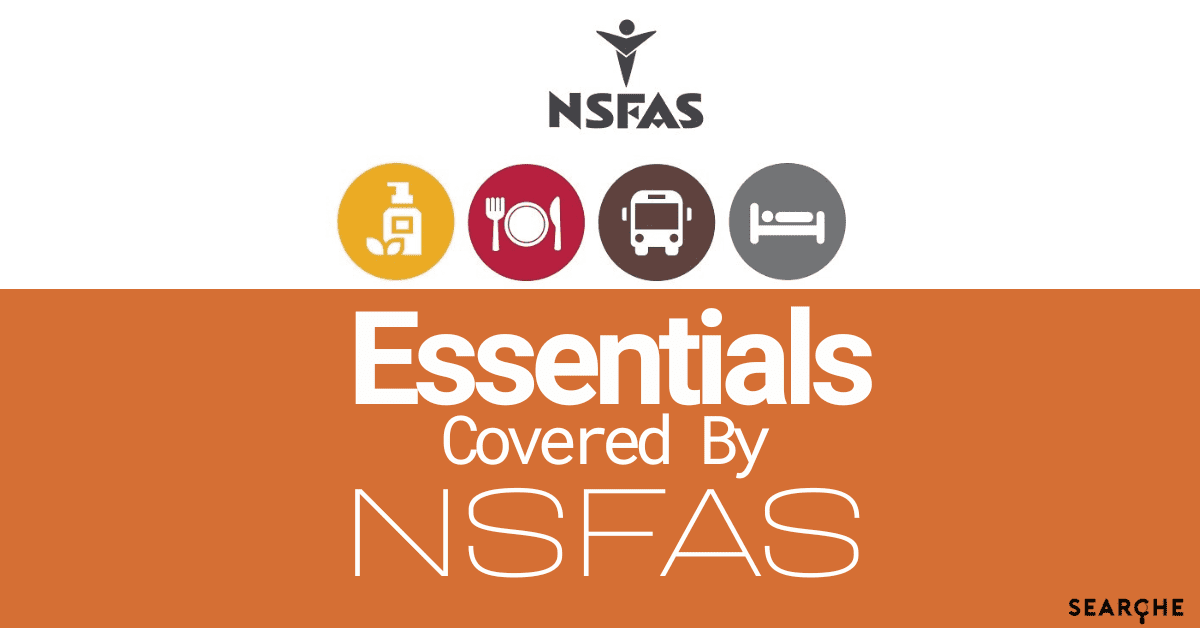
However, all students who have received funding after 2018 have benefited from non-refundable bursaries. NSFAS bursary covers student expenses such as registration fees, tuition fees, transport and accommodation costs, study material, meals, and personal care allowance.
Students who are eligible to get the bursary should have a combined household income of less than R370 000. For students with disabilities, their combined household income should not be more than R600 000. NSFAS pays the money directly to the student’s university or TVET College. Students who qualify for NSFAS funding should have been offered places to study at TVET colleges or public universities in South Africa.
Why Was NSFAS Created?
NSFAS was specifically created to redress the past discrimination that existed in the education system during the apartheid era in South Africa. Moreover, it was designed to ensure equal access to tertiary education, promote human resources development, and provide an affordable and sustainable student financial aid scheme. NSFAS’s mission statement is based on the following elements:
- Provide financial aid to eligible students who intend to study at TVET colleges or public universities.
- Support access to higher education for students from working class and poor families.
- Create a sustainable financial aid scheme.
The government is mandated to subsidize university education to promote future economic growth. However, tertiary education is not affordable to ordinary students from poor backgrounds. As a result, NSFAS was created to increase access to universities by all deserving students regardless of colour, race, creed, or belief.
Who Benefits From NSFAS?
NSFAS is designed to cater to the financial needs of deserving South African citizens who intend to study at TVET colleges or public universities. To qualify for funding, all applicants must meet the following requirements.
- You must be a South African citizen or permanent resident with a valid ID number
- You receive a SASSA grant
- Your family’s combined annual household income is less than R35 000. Students with disabilities must have a combined household income of not more than R600 000.
- You want to register for the first time at TVET College or a public university for a qualification.
- To study at a TVET college and get NSFAS funding, an applicant must pass Grades 9 & 10.
- Prospective university students and NSFAS beneficiaries must pass Grade 12.
NSFAS funding helps students pay their registration fees, tuition fees, accommodation expenses, transport costs, study material, and personal care allowances. Every student is entitled to get monthly allowances for each of these components for 10 months. However, the amounts of NSFAS allowances received by students vary since they are determined by the institutions.
NSFAS only funds students for a maximum of five years. If you take more than 5 years to complete your studies, it means that you will have to pay for the remaining part of your studies until you graduate. Moreover, all students should meet the expected standards in terms of academic performance. NSFAS has the right to withdraw funding from students who perform poorly in their studies.
The South African education system was skewed in favor of the white minority population who could also access university education. However, the black government has sought to address this anomaly by establishing NSFAS, an agency mandated to provide funding to deserving students from poor financial backgrounds. The scheme aims to promote access to university education to all deserving students regardless of their colour.